
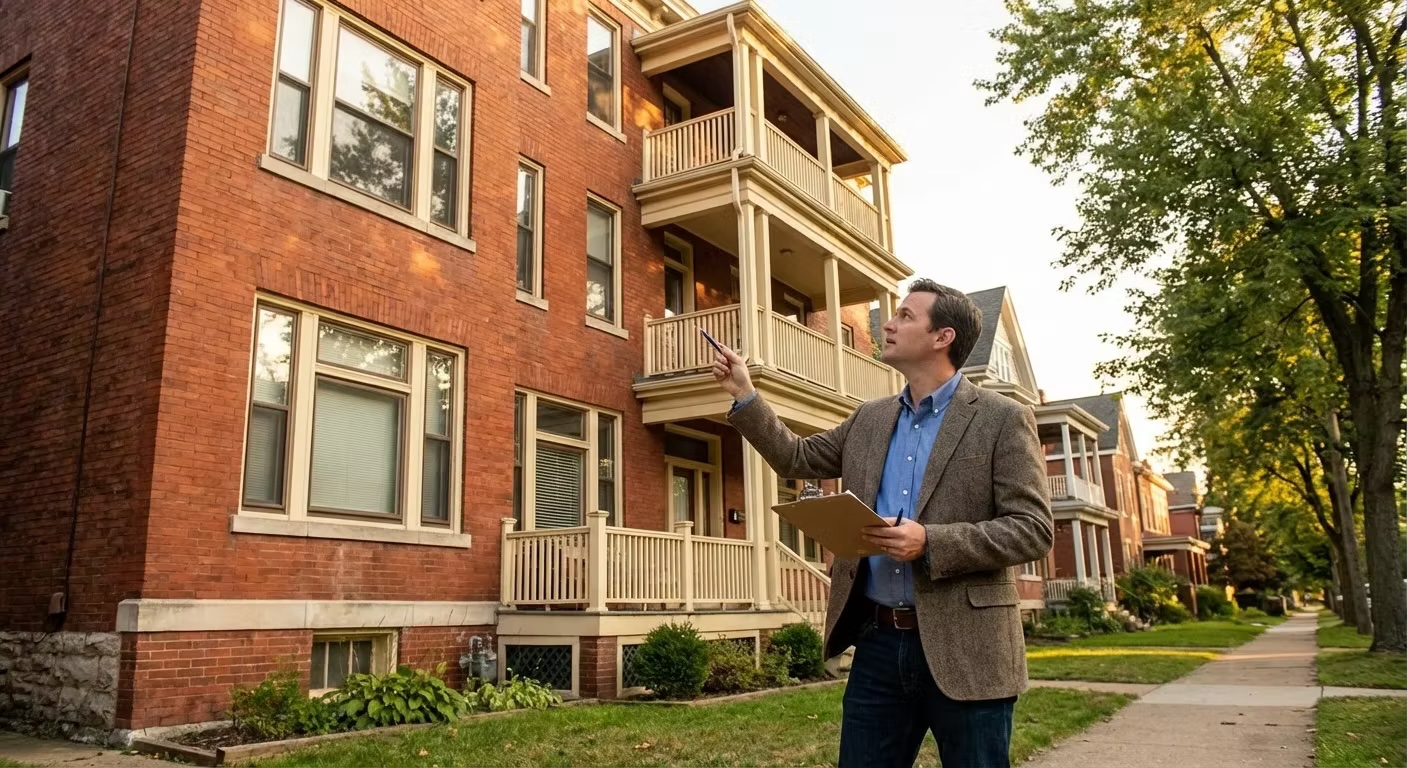
Why Smart Investors Are Buying Pawtucket Multi-Family Properties in 2026
Massachusetts renters are leaving. Not in small numbers either. Between 2021 and 2022, the state lost 45,614 tax filers representing $3.9 billion in adjusted gross income. The 26-to-44 age demographic accounted for 44 percent of that departing income.
And a good chunk of those renters? They're crossing into Rhode Island. I've watched this happen from my office in Pawtucket over the past decade, and I've positioned most of my own portfolio here for exactly this reason. The rent arbitrage between Massachusetts and Rhode Island is REAL, and smart multi-family investors are capitalizing on it right now.
Article Outline
The Rent Arbitrage Opportunity: How Much Do Renters Actually Save?
Cap Rates and Pricing: Pawtucket vs Massachusetts Gateway Cities
The Rent Arbitrage Opportunity: How Much Do Renters Actually Save?
The numbers tell the story. As of December 2025, a one-bedroom apartment in Pawtucket averages roughly $1,447 per month. That same apartment in Attleboro, just fifteen miles away, runs $1,773. That's a $326 monthly difference. Over a year, a renter saves $3,912 by choosing Pawtucket over Attleboro. For a family in a two-bedroom unit, Pawtucket at $1,756 versus Attleboro at $2,050 represents $294 in monthly savings.
Compare Pawtucket to Brockton. A one-bedroom in Brockton costs $1,786 versus $1,447 in Pawtucket. That's $339 monthly savings, or 23.4 percent cheaper. Even Fall River, which is considered a more affordable Massachusetts market, charges $1,595 for one-bedrooms compared to Pawtucket's $1,447. These aren't trivial differences for working families living paycheck to paycheck.
The typical Gateway City renter household in Massachusetts earns about $54,000 annually. But the minimum income required to afford typical asking rent stands at $94,000. That's a $40,000 annual income gap.
Gateway City rents rose 6.6 percent from mid-2024 to mid-2025, faster than the 4 percent growth the previous year. Renters aren't stupid. They're doing the math and realizing that crossing the state line saves them real money without sacrificing quality of life.
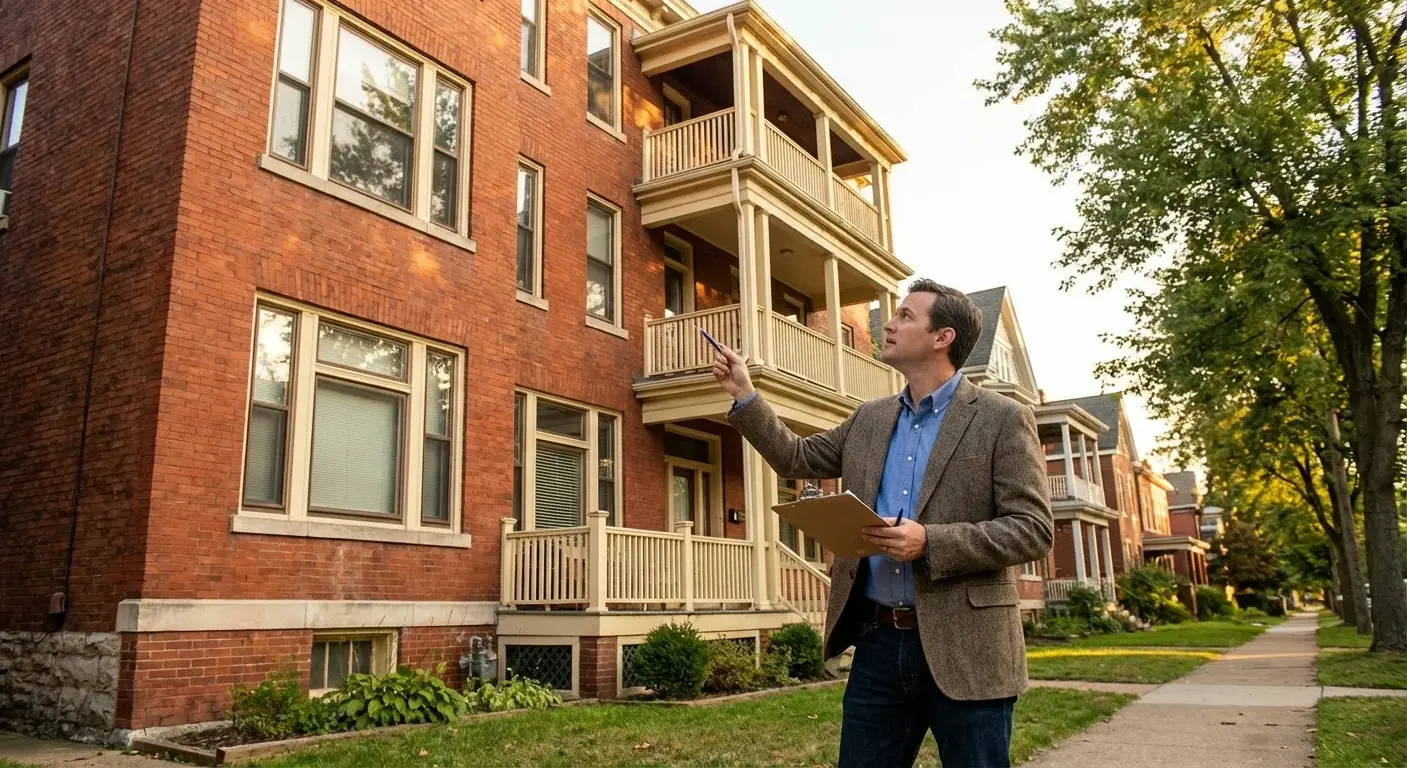
Why Pawtucket Specifically?
I've been investing in Pawtucket since 2012. At my peak, I owned and managed around 100 apartments, and most of my current portfolio of about 60 units is concentrated here. There are specific reasons why I keep coming back to this market instead of spreading into other Rhode Island cities.
First, the taxes are reasonable. Providence has extraordinarily high property taxes that eat into your returns. Pawtucket offers a more balanced tax environment. Second, the city is genuinely easy to work with. I've dealt with bureaucrats in multiple jurisdictions, and Pawtucket's planning and zoning process is manageable compared to other places I've operated.
Third, rental demand is STRONG. The proximity to Massachusetts means you're pulling from a massive tenant pool of people who work in Attleboro, Fall River, Brockton, and even Boston. They want the lower rents but need reasonable commute options. Pawtucket delivers that combination better than almost any other Rhode Island market.
The city has also attracted $184 million in private sector investments over the past decade. Mill redevelopments, new construction along the riverfront, and major projects like Tidewater Landing are transforming the downtown area. This isn't a market coasting on past momentum. New capital is flowing in, and that creates positive spillover effects for residential property values throughout the city.
The Commuter Rail Changed Everything
The Pawtucket/Central Falls Commuter Rail Station opened in summer 2022. This single infrastructure improvement fundamentally altered the investment thesis for Pawtucket multi-family properties. Before the station, choosing Pawtucket meant trading convenience for cost savings. Now, residents can access Boston employment centers via MBTA service on the Northeast Corridor, one of the most active passenger rail segments in the country.
The ridership numbers demonstrate this isn't theoretical demand. In May 2023, the station recorded 439 daily boardings. By March 2024, that jumped to 701 daily boardings. A 59.7 percent year-over-year increase. By August 2025, the station was handling approximately 1,000 daily boardings. That growth trajectory tells you renters are discovering this option and acting on it.
For a working professional employed in Boston, the commuter rail connection enables them to capture $300 or more in monthly housing savings while maintaining reasonable commute times. Many employers now offer flexible work arrangements, which makes a 25-to-40 minute rail commute even more palatable when you're only going into the office two or three days per week.
Pawtucket's population has grown about 2 percent from 2020 through 2024, compared to just 0.7 percent for the broader Providence-Warwick metropolitan area. Projections indicate that Pawtucket's population will grow by 2.8 percent over the next five years. That's faster-than-region growth driven by inbound migration from cost-burdened Massachusetts renters.
Cap Rates and Pricing: Pawtucket vs Massachusetts Gateway Cities
Let's talk about what you're paying for these properties. The median sales price for multi-family properties throughout Rhode Island reached $590,000 in May 2025.
That was the first time this asset class surpassed the $500,000 benchmark statewide. Individual Pawtucket transactions may trade below this median depending on property condition, rent roll positioning, and neighborhood factors.
Providence-area cap rates as of October 2025 show Luxury Metro Class A properties at 5.18 percent, Class B at 5.21 percent, and Class C at 5.80 percent. For value-add opportunities, cap rates expand to 6.77 percent. That value-add premium reflects execution risk, but properly qualified investors can achieve enhanced returns through disciplined repositioning strategies.
A six-unit property in East Providence closed in late July 2025 near the mid-$700,000s. Many 2-3 family homes in that area trade between the mid-$400,000s and high-$800,000s depending on size, condition, and location.
These acquisition costs remain meaningfully lower than comparable Massachusetts assets, which translates directly to better cash-on-cash returns for investors.
But here's the critical caveat: Rhode Island has a split property tax system that hammers commercial apartment buildings. The effective commercial real estate tax rate is $21.06 per $1,000 of assessed value, compared to $12.40 for residential properties. That's 52 percent higher. In Providence specifically, commercial owners pay $35.10 per $1,000 compared to homeowners' $10.46.
You must underwrite these tax burdens accurately, or your projections will be dangerously optimisitc.
Financing Your Pawtucket Multi-Family Acquisition
Rhode Island has an active hard money lending market. During Q4 2024, approximately $74.7 million in hard money loans were funded for 200 borrowers statewide. The Providence-Warwick metro area alone recorded $100.7 million for 261 borrowers. Multiple lenders are competing for your business, which means you can shop terms and negotiate pricing.
Average interest rates for Rhode Island hard money loans in Q4 2024 reached 10.53 percent, with average loan amounts around $666,000. Another data source reported slightly lower rates of 9.80 percent with 2.5 points origination and average LTV of 61 percent. The variance reflects different borrower profiles and deal structures.
For a typical value-add acquisition in Pawtucket, here's how the numbers might work: You target a $400,000 purchase at 70 percent LTV, which gets you $280,000 in funding. You bring $120,000 in equity. At 12 percent interest with 3 points, you're paying about $8,400 in origination and $33,600 in annual interest. For a twelve-month hold covering acquisition, renovation, and stabilization, total hard money costs run about $40,000.
At Rapid Fund Lending, I pride myself on providing loan commitments within 24 hours of seeing a property. When you find a deal that requires speed, whether it's a distressed seller or competitive bidding situation, having a lender who can move fast gives you an enormous competitive advantage. Traditional banks simply cannot match that timeline.
The BRRRR Strategy in Pawtucket
The BRRRR method (Buy, Rehab, Rent, Refinance, Repeat) works particularly well in this market. Here's a realistic scenario: You identify a 4-unit building in Pawtucket's Downtown with units renting at $1,200 when market is $1,447. The $480,000 acquisition price reflects below-market rents and deferred maintenance.
You secure hard money at 70 percent LTV ($336,000) and budget $35,000 per unit ($140,000 total) for cosmetic improvements, window replacement, and roof repairs. After 4-5 months of renovation, you implement rent roll transition.
Current tenants get modest increases to $1,300. New leases command full market rate. After stabilization, you've got average rents around $1,375 generating $79,200 annually versus the original $57,600.
With stabilized income, the property now supports traditional financing. At 6.0 percent cap rate, the new income supports approximately $800,000 valuation. A 70 percent LTV refinance provides $705,600, enough to pay off your hard money, recover your equity, and perhaps pocket cash-out proceeds for the next acquisition.
The Risks You Need to Know About
I'm not going to sugarcoat this. Pawtucket multi-family investing carries specific risks that Massachusetts investors need to understand before writing checks.
Lead Paint Compliance
Rhode Island's lead paint compliance regime is serious business. All rental properties built before 1978 face mandatory compliance with Rhode Island's Lead Hazard Mitigation Regulations. You need licensed lead inspections, Lead Conformance Certificates, and bi-annual inspection schedules. Non-compliance can restrict your ability to collect rent, cause you to lose liability insurance, and expose you to tenant claims if lead exposure creates health impacts.
Budget $300-$500 per unit for lead inspection and variable repair costs depending on whether you need simple painting or full window replacement. If violations exist, repairs must be completed within 90 days or you face insurance loss and rent collection restrictions. This isn't optional expense. It's MANDATORY, and ignoring it will cost you far more than compliance ever would.
Fire Code Requirements
Rhode Island has stringent fire codes following the 2003 Station nightclub fire. A horrific tragedy that killed 100 people led to sweeping regulatory changes. If you're buying a 4-unit or larger multi-family, you need a full-blown fire alarm system.
We're talking $30,000-$50,000 for installation. That's not a typo. If you walk into a deal without understanding these costs, that fire code compliance bill could wipe out your entire projected profit and then some.
Fire code compliance deserves its own line item in your underwriting. Don't bury it in a general renovation budget where it gets minimized. This is a real cost that applies to every larger multi-family acquisition in Rhode Island.
Aging Housing Stock
Pawtucket's housing stock skews significantly older. Many units were built well before 1978. This means higher capital expenditure requirements for major systems. Roof replacement within five-to-ten years, Heating system replacement within fifteen years, and windows/exterior work within your hold period. A property with $60,000 annual NOI might require 15-20 percent annual allocation to capital reserves, reducing distributable cash flow significantly.
The flip side: older buildings often trade at substantial discounts to replacement cost. A brick mill building from the 1920s might acquire at $300,000 while the cost to construct equivalent new space would reach $800,000+. That acquisition advantage can more than offset higher capital expenditures if you underwrite accurately.
Property Tax Burden
I mentioned the commercial property tax disparity earlier, but it bears repeating. The 52 percent higher tax rate on commercial apartment buildings versus residential properties represents a significant drag on cash flow.
A $1 million acquisition might face $21,000-$25,000 annually in property taxes at the commercial rate, compared to $12,000-$15,000 if the same property qualified for residential rates. Model property tax growth of 3-5 percent annually in your projections.

The Due Diligence Process for Massachusetts Investors
If you're a Massachusetts-based investor buying your first Pawtucket multi-family, here's the process I recommend:
Weeks 1-4: Market Research and Property Identification. Study specific neighborhoods. Downtown, Oak Hill, and Darlington have documented revitalization momentum. Pull rent comps from multiple sources. Engage a local Rhode Island broker who specializes in multi-family sales. Interview at least three brokers before committing to one.
Weeks 4-8: Property Evaluation and Preliminary Underwriting. Identify 3-5 target properties. Obtain the seller's disclosure package including rent roll, P&L statements for two to three years, property tax statements, and capital expenditure records. Red flag: if a seller can't provide organized financial documentation within 7-10 days, proceed with elevated caution.
Weeks 8-10: Property Tour and Physical Inspection. Visit the property multiple times. Once during business hours, once in the evening, and once on a weekend if possible. Engage a structural contractor for preliminary assessment of roof, foundation, and mechanical systems. Budget $500-$1,000 for this evaluation.
Weeks 10-12: Make Offer and Negotiate. Include 14-day inspection period, 30-day financing contingency, title contingency, and appraisal contingency. Require the seller to deliver copies of all executed leases within 7 days of acceptance.
Weeks 12-16: Lease Audit and Financial Verification. Compare lease rent amounts and expiration dates to the seller's rent roll. Walk all units and verify occupied count matches documentation. Obtain three years of historical P&L statements and reconcile against lease documentation. Conduct Phase I Environmental Site Assessment ($1,500-$3,000).
Weeks 14-18: Contractor Inspections. Engage licensed contractors for roofing, HVAC, electrical, plumbing, and structural inspections. Budget $2,000-$5,000 for this phase. Consolidate reports into a comprehensive capital expenditure plan.
Weeks 16-22: Financing and Closing. Submit formal financing application. Satisfy all conditions. Conduct final walk-through within 48 hours of closing. Close and transition property management.
Structuring Deals for Maximum Cash Flow
The optimal acquisition involves purchasing properties with rents materially below market rate. This gives you immediate arbitrage opportunity upon lease turnover. An investor acquiring with average rents of $1,250 when market rent is $1,447 can implement modest annual increases of $50-100 while allowing in-place tenants to gradually reach market rates. New tenants enter at full market pricing.
This transition approach generates superior risk-adjusted returns compared to aggressive immediate rent increases. Tenants hit with 15+ percent hikes often leave, creating lease-up costs and vacancy periods that offset your rent increase benefits. Gradual increases maintain tenant retention and minimize turnover costs.
Strategic lease-term structure also matters. If you acquire in January with existing leases expiring in January of the following year, you can reset the entire rent roll simultaneously. Staggered expirations throughout the year create constant turnover with new rents mixing with in-place rents for extended periods.
Don't overlook ancillary revenue. Parking fees, utility cost pass-through (where permitted), pet fees, and application fees can add 5-10 percent to gross rental revenue. A four-unit building with $1,400 average rent might generate $3,300-$6,700 annually in ancillary revenue. Across a portfolio of ten properties, that compounds to meaningful cash flow contribution.
Making the Investment Decision
The Massachusetts-to-Rhode Island rent arbitrage is real and it's sustainable for the foreseeable future. Massachusetts isn't going to suddenly become affordable. The structural housing shortage, regulatory constraints on new development, and persistent cost-of-living pressures will continue pushing renters toward more affordable alternatives.
Pawtucket sits at the intersection of multiple favorable trends: strong commuter rail access, active redevelopment, reasonable property taxes relative to Providence, and acquisition prices below comparable Massachusetts markets. The investor who understands how to navigate Rhode Island's lead compliance, fire code requirements, and commercial property tax structure can achieve returns that simply aren't available across the state line.
But this isn't a passive investment. You need to underwrite conservatively. Budget for 7-9 percent vacancy in base case scenarios. Project 1.5-2 percent annual rent growth instead of the historical 3 percent. Allocate 15-20 percent of NOI to capital reserves for aging properties. Model property tax growth of 3-5 percent annually.
If you're a Massachusetts investor ready to explore Pawtucket multi-family opportunities, the market fundamentals support your thesis. The tenant demand is there. The acquisition pricing works. The financing infrastructure exists. What's required is disciplined execution and realistic expectations about the work involved.
Ready to discuss financing for your Pawtucket multi-family acquisition? Apply for a loan at Rapid Fund Lending. I review every application personally and can typically provide loan commitment within 24 hours of seeing the property.
The information provided here is for educational purposes only and does not constitute financial or investment advice. Always perform your own due diligence and consult with qualified professionals before making investment decisions.